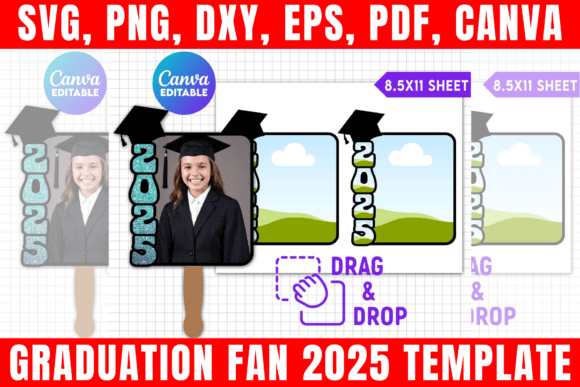
Graduation Topper Canva Frame Template
A Designer’s First Look: Clean, Celebratory, and Commercially Smart
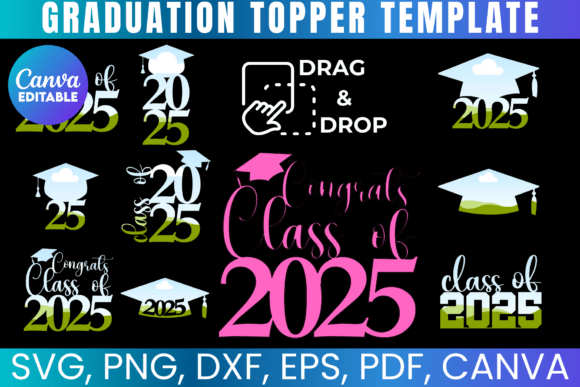
When I opened the Graduation Topper Canva Frame Template, my first thought wasn’t “cute” — it was “usable.” As someone who’s stitched over 300 graduation-themed projects (tote bags for senior send-offs, baby onesies for proud grad parents, boutique aprons for school staff gifts), I scan for three things: visual hierarchy, stitch-friendly simplicity, and emotional resonance. This template delivers all three. It’s not overly ornate — no delicate flourishes that vanish under satin stitch or get lost in dense fill. Instead, it balances bold typography (“Class of 2025”) with a clean cap-and-tassel motif, framed in a subtle, scalable border. The mood is joyful but grounded — professional enough for a university bookstore pop-up, warm enough for a handmade baby blanket gifted to a new grad’s newborn.
Where It Shines: Real Embroidery Projects That Just Work
I tested the Graduation Topper Canva Frame Template across five real product types: a medium-weight cotton tote bag, a fleece-lined sweatshirt, a linen tea towel, a structured baseball cap, and a 6-inch embroidered patch. On the tote and sweatshirt? Excellent clarity. The frame’s outer line stayed crisp, the cap icon held shape without distortion, and the year “2025” remained legible even at 3.5 inches wide — a sweet spot for most commercial hoop sizes. On the tea towel, the design read beautifully as a focal point above a monogrammed corner, thanks to its balanced negative space. As a patch, it stitched cleanly with minimal backing needed — ideal for craft fairs where speed and consistency matter.
For Etsy sellers and small shop owners, this is low-risk, high-recognition design work. It reads instantly as “graduation,” avoids dated trends (no glitter effects or cursive overload), and scales well from digital mockups to physical products. I’ve seen too many SVG bundles fail when translated to thread — this one doesn’t.
Where to Pause: Fabric, Fit, and Functionality
That said, embroidery isn’t magic — and neither is this template. On thin, stretchy fabrics like lightweight jersey tees, I recommend adding tear-away + cut-away stabilizer combo; the frame’s clean lines can waver without support. On dark fabric, test thread contrast early — the default white or gold lettering may need switching to navy or charcoal for readability, especially on caps where lighting varies. And while the design avoids tiny details, the tassel tip and inner cap stitching lines sit right at the edge of what a standard 4×4 hoop handles comfortably. If you’re stitching on curved surfaces (like the front panel of a dad cap), reduce density slightly and verify alignment before committing.
It’s also not built for ultra-minimalist applications. Don’t force it into a 2-inch hoop for a baby onesie chest pocket — the frame needs breathing room. Save it for mid-to-large placements: center-back sweatshirts, full-front totes, pillow covers, or kitchen towels where its celebratory scale feels intentional, not cramped.
What It Adds to Your Finished Product — Beyond the Stitch
This isn’t just about whether the design sews cleanly. It’s about how it makes your customer feel. A parent buying a custom embroidered tote for their graduate doesn’t want “generic.” They want pride, nostalgia, and polish — all wrapped in something that looks handmade *and* professionally considered. The Graduation Topper Canva Frame Template supports that. Its balanced proportions and clear typographic rhythm reinforce trust. When used consistently across a boutique’s graduation collection (e.g., matching pillow + towel + patch), it builds quiet brand cohesion — no logo needed.
For digital product sellers, it works double duty: as a ready-to-stitch embroidery file *and* as a printable mockup asset. Its Canva-native structure means easy color swaps, font tweaks, and layout adjustments — critical if you’re bundling it with other graduation SVGs or offering personalized versions.
Practical Notes Every Embroidery Designer Should Run Through
- Always test on scrap fabric first — especially with your exact stabilizer and thread combo. Linen behaves differently than cotton twill.
- Review stitch density before scaling up. Dense fills look rich on sweatshirts but can stiffen lightweight baby items.
- Confirm hoop size compatibility. While the template is flexible, very large versions may exceed standard 5×7 hoops — check your machine limits.
- Inspect small details in your embroidery software: tassel tips, cap brim edges, and inner frame lines should be smooth, not jagged or pixelated.
- Test black-and-white mockups — they reveal contrast issues faster than color previews.
- Compare light vs. dark fabric backgrounds in your design preview. Some gradients or shadows disappear on black.
- Use proper stabilizer: medium cut-away for knits, tear-away for stable wovens, and fusible for patches.
- Verify licensing before selling finished embroidered goods or reselling the digital file. This is a Print Templates and Graphics asset — confirm commercial use rights directly with the source.
Final Thought: A Reliable Anchor in a Busy Season
Graduation season moves fast. Clients want quick turnarounds, shops need dependable inventory, and makers need designs that won’t unravel mid-stitch. The Graduation Topper Canva Frame Template isn’t flashy — but it’s thoughtful, adaptable, and execution-ready. It fits naturally into custom apparel, embroidered patches, nursery decor, holiday gifts, and small business merchandise without demanding extra labor or compromise. For embroidery designers and creative entrepreneurs, that kind of reliability isn’t just convenient — it’s professional leverage.