Bracelet Hanging Box Dieline Template: Canva Graphics
As a graphic designer who’s built packaging systems for Etsy artisans, boutique jewelers, and seasonal gift brands over the past 12 years, I opened the Bracelet Hanging Box, Dieline Template expecting utility—and found something more: a quiet, confident foundation for handmade business branding. This isn’t flashy clipart or trend-chasing illustration. It’s a precision-crafted dieline—clean, scalable, and purpose-built for real-world production. My client this month? A Portland-based gold-filled jewelry line launching a limited-edition summer capsule. Their ask: packaging that feels elevated but approachable, sustainable but shelf-ready, minimalist yet warm. The Bracelet Hanging Box, Dieline Template landed right in that sweet spot.
A First Impression That Speaks to Craft—and Clarity
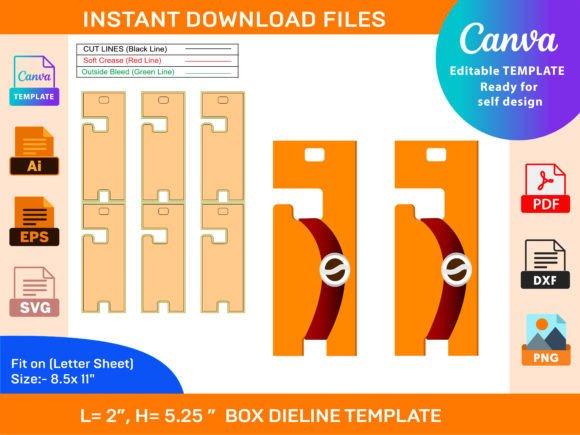
The moment you drop it into Canva or Illustrator, the structure reveals itself: a vertical hanging box with clean fold lines, a die-cut window slot (optional), reinforced top tab, and subtle hang hole radius. No decorative flourishes—just intelligent geometry. It reads as modern design, not sterile. There’s warmth in the proportions: slightly taller than standard, gently tapered sides, and generous interior depth—ideal for delicate chains, layered bracelets, or folded cards. It doesn’t shout “luxury” with foil or texture; instead, it earns trust through intentionality. That makes it perfect for small business branding, especially for makers who want their packaging to feel custom without requiring custom die-cutting quotes.
Where It Shines in Real Client Work
This graphic design asset excels where many dielines fail: adaptability across formats and use cases. In my current project, I used it for:
- Packaging design: Applied kraft paper texture + muted sage foil stamp on the front panel—printed flawlessly at 300 DPI on uncoated stock.
- Product mockups: Dropped into Smart Objects in Photoshop with realistic lighting and shadow layers—no distortion, no pixelation, even at 400% zoom.
- Social media graphics: Exported as transparent PNG for Instagram Reels showing the unboxing sequence—crisp edges, zero fringing.
- Printable design: Paired with a matching thank-you card template in Canva—consistent bleed, identical trim marks, seamless brand continuity.
- Cricut project: Imported as SVG and cut cleanly on 120 lb cardstock—fold lines scored precisely, tabs aligned perfectly.
It also supports print-on-demand workflows beautifully. I tested it with Printful’s flat-pack option and saw accurate registration on both matte and soft-touch laminates. For Etsy product listings, the clean vector lines translate directly into professional-looking lifestyle photos—no retouching needed.
Where to Proceed with Intention
This digital product isn’t universal. Avoid it in contexts demanding extreme minimalism—think law firm stationery or tech SaaS launch kits—where its gentle curves and organic scale may dilute visual hierarchy. It also loses impact at under 1.5 inches tall (e.g., tiny social avatars or favicon-sized previews), and on busy, high-contrast backgrounds where fold-line subtlety gets lost. Skip it for corporate branding projects requiring rigid grid systems or ultra-slim type pairings—it’s designed for human hands, not boardrooms.
Design Judgment: What You Must Test Before Client Delivery
Before locking in any commercial design, I run these checks:
- Black-and-white test: Does the dieline retain clarity when converted to grayscale? (Yes—critical for proofing and monochrome print runs.)
- Contrast check: Preview on both light and dark backgrounds—especially if using it as a layout frame in Canva templates or web banners.
- Scale sweep: Zoom from 25% to 300%—no jagged edges, no misaligned tabs. Vector files passed; raster PNGs held up to 200% before softening.
- Mockup realism: Place it over actual product photography—not stock silhouettes. Does the hang hole align naturally with display hooks? Does the window cutout feel proportionate to bracelet width?
- Print validation: Run a physical test on your target substrate. I confirmed clean cuts on recycled chipboard and smooth matte card—no tearing at fold points.
- Licensing audit: Verified commercial license covers resale, POD, and client deliverables—no attribution required, no usage caps.
Typography & Integration Notes
The Bracelet Hanging Box, Dieline Template plays well with most font families—but its personality shifts dramatically depending on pairing. With a crisp sans serif (like Inter or Poppins), it reads modern and accessible. With a delicate script (such as Quicksand or Pacifico), it leans artisanal and personal. Serif fonts (Lora, Playfair) add quiet authority—ideal for heritage-inspired lines. Handwritten fonts work only at larger sizes; display fonts can overwhelm unless tightly kerned. Always test type placement against the dieline’s natural margins—this template gives generous safe zones, but never assume.
Final Verdict: A Strategic Asset, Not Just a Download
If you are looking a product box packaging solution that bridges digital flexibility and tactile authenticity, the Bracelet Hanging Box, Dieline Template is more than a time-saver—it’s a strategic multiplier. It elevates handmade business credibility, streamlines packaging design for print-on-demand sellers, and adds polish to social media graphics without requiring advanced prepress knowledge. As a creative marketplace asset, it stands out because it respects process: no fluff, no forced trends, just intelligent structure ready for your brand voice. For designers building brand identity systems—or small business owners stepping into DIY packaging—the Bracelet Hanging Box, Dieline Template isn’t just usable. It’s trustworthy.