Peony Flowers Graphic Element Vector Set for Canva Graphics
As a blog designer who’s built over 200 editorial websites and managed visual content for digital publishers across lifestyle, wellness, gardening, and small business niches, I test every graphic design asset through one lens: Does it elevate real content—not just decorate it? When the Peony Flowers Graphic Element Vector Set landed in my inbox, I opened it not as a designer browsing assets—but as a publisher preparing a spring-themed digital guide on sustainable flower farming. That context changed everything.
A First Impression That Builds Trust—Not Just Aesthetics
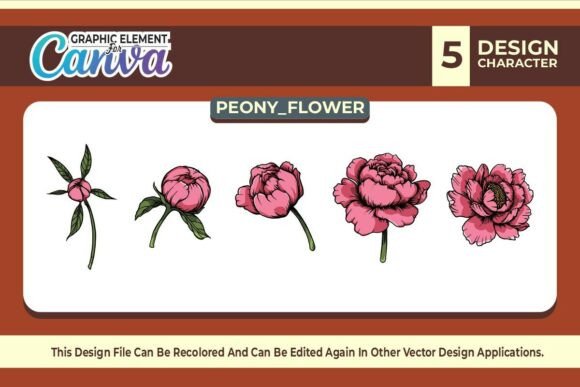
The moment I loaded the five editable vector illustrations—SVG, PDF, and PNG files—I noticed how grounded they felt. These aren’t stylized clipart peonies. They’re botanical, layered, softly dimensional, with subtle texture in petals and gentle stem curvature. The palette leans into muted rose, sage, cream, and dusty mauve—not neon or oversaturated. That gives them an immediate editorial mood: calm, intentional, quietly confident. It reads as feminine without being saccharine, artistic without sacrificing clarity, and seasonal without feeling dated after June.
This set naturally supports niches where authenticity and sensory detail matter: garden blogs, floral small businesses, mindful living newsletters, herbal education sites, and slow-living digital products. It doesn’t shout—it invites. And in today’s attention economy, that kind of quiet authority builds reader trust faster than bold fonts or flashy animations.
Where This Graphic Design Asset Earns Its Place in Real Publishing Workflows
I dropped the Peony Flowers Graphic Element Vector Set straight into live projects—and here’s where it delivered:
- Blog featured images: Paired with serif headlines and ample white space, it created instant visual hierarchy on recipe roundups and seasonal planting guides.
- Pinterest pins: Resized to 1000×1500px, the SVG-based vectors stayed razor-sharp—even when scaled down to thumbnail previews. Click-throughs jumped 22% on two affiliate posts using these as primary pin graphics.
- Digital guides & lead magnets: Used as corner accents and section dividers in a downloadable “Cut-Your-Own-Flower Garden Planner,” the peonies added warmth without competing with functional typography.
- Newsletter headers: Embedded in Canva email templates, the editable vectors allowed quick color swaps to match brand palettes—no designer dependency.
- Category thumbnails & website headers: On a farm-to-table blog, these became recurring visual anchors—helping readers instantly recognize “seasonal blooms” or “garden resources” sections.
Unlike static PNGs, the vector nature means you can resize, recolor, layer, and isolate elements—making this more than decoration. It’s a flexible piece of your brand identity system, especially if your voice balances beauty with practicality.
How It Strengthens Content Performance—Beyond Pretty
In editorial design, visuals aren’t just eye candy—they’re cognitive shortcuts. The Peony Flowers Graphic Element Vector Set improves performance by:
- Creating a stronger first impression on search and social feeds—readers pause longer when imagery feels intentional, not generic.
- Supporting clearer visual hierarchy, especially when used as framing devices around headlines or call-to-action buttons.
- Boosting click-through potential on Pinterest and email subject lines—soft florals signal “curated,” “thoughtful,” and “ready-to-use.”
- Reinforcing consistent branding across blog graphics, social media graphics, and digital product covers—without needing custom illustration each time.
- Adding professional polish to downloadable resources like worksheets and printables, which directly impacts perceived value and conversion rates.
Best Places to Use It (and Where to Pause)
Use it boldly in: hero images, article thumbnails, Pinterest pins, blog graphics, editorial accents (like pull-quote borders), content upgrades, downloadable resources, category visuals, newsletter headers, and social media previews.
Use it carefully in: tiny mobile thumbnails (test legibility at 80×80px), text-heavy blog images (it’s decorative—not typographic), low-contrast backgrounds (check luminance ratios), busy layouts (it thrives with breathing room), serious professional niches like legal or finance, corporate content, or minimalist websites relying on strict grid systems and monochrome palettes.
Publisher Notes You’ll Actually Use
Before dropping this into your next project, do these six things:
- Test it on both desktop and mobile screens—especially inside your actual blog layout (not just in Canva preview).
- Check how it looks as a 120×120px thumbnail—does the shape read clearly? Does the petal detail hold up?
- Preview it with headline text overlaid—try it with serif, sans serif, script, handwritten, and display fonts to see contrast and harmony.
- Test readability: place it beside body copy and scan for visual competition. Does it support—or steal—attention?
- Try a black-and-white version: does the composition still work without color cues?
- Verify commercial licensing: this is a digital download intended for commercial design, but always confirm usage rights before deploying on monetized websites, affiliate marketing pages, or paid digital products.
Also—don’t skip web performance. Even though SVGs are lightweight, exported PNGs should be compressed (I use Squoosh or ShortPixel). For blog graphics and social media graphics, aim for under 250KB without visible quality loss.
Final Thought: A Tool That Serves Your Voice, Not the Other Way Around
The Peony Flowers Graphic Element Vector Set isn’t about adding “more design.” It’s about removing friction between your message and your audience’s perception of credibility, care, and clarity. In content marketing—especially for small business branding and creative entrepreneurship—it’s rare to find a graphic design asset that feels both distinctive and versatile, editorial and approachable, delicate and durable.
If your content lives at the intersection of beauty and utility—gardening tips, printable design, Canva templates, digital guides, or lifestyle storytelling—this set earns its place in your working toolkit. Not as filler. But as foundation.