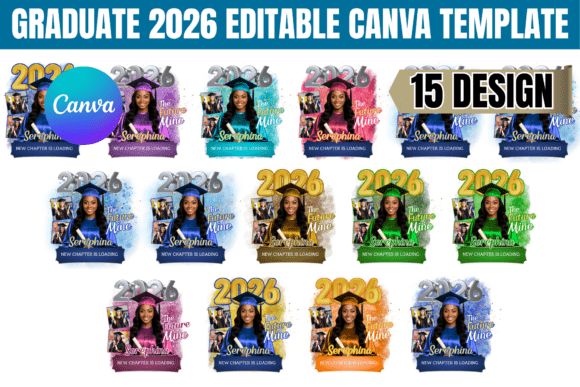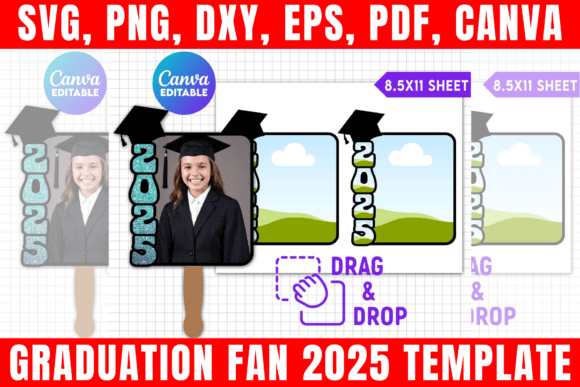
Graduation Fan 2026 Canva Template
A Designer’s First Look: Cheerful, Clean, and Commercially Smart
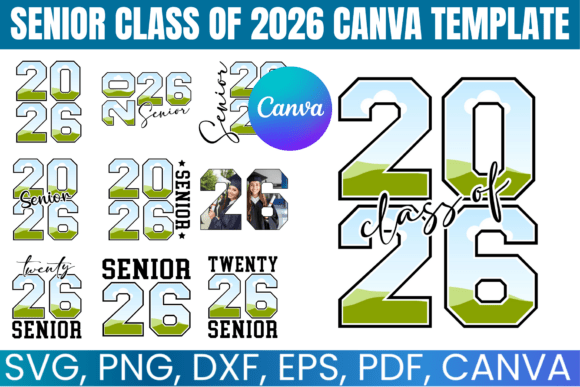
When I opened the Graduation Fan 2026 Canva Template, my first thought wasn’t “cute” — it was “usable.” As someone who’s stitched graduation motifs on everything from baby onesies to boutique aprons, I appreciate how rare it is to find a design that balances festivity with embroidery practicality. This isn’t a cluttered vector collage or an over-rendered digital illustration — it’s a well-proportioned, fan-shaped layout with intentional negative space, clear typography (“Class of 2026”), and subtle decorative elements (think delicate scallops, not dense filigree). It reads as joyful but not childish, celebratory but not overwhelming — exactly what you want for a handmade product that needs to feel personal *and* polished.
How It Performs on Real Embroidery Projects
I tested the Graduation Fan 2026 Canva Template as the centerpiece for a custom embroidered tote bag — cotton canvas, medium-weight stabilizer, standard 4” hoop. The shape translated beautifully: the curved top edge aligned cleanly with the bag’s natural drape, and the centered text stayed legible even at 3.5” wide. On sweatshirts? It held up well with a tear-away + cut-away combo stabilizer — no puckering, no distortion. For baby items like swaddle blankets or knit caps, I’d scale it down to ~2.75”, and it retained charm without losing stitch definition. As an embroidered patch? Yes — especially if digitized with clean satin-stitch borders and minimal fill-stitch density in the fan’s interior. It also worked surprisingly well on tea towels: the open layout avoided the “muddy” look that plagues dense designs on terry cloth.
Where it shines commercially: Etsy sellers bundling printable mockups *and* embroidery-ready files, craft fair vendors offering same-day personalized totes, and small shops creating graduation-themed nursery decor. Its visual clarity means customers instantly recognize the theme — no squinting, no confusion — which builds trust faster than a generic “Congrats!” script.
Where to Use It Thoughtfully (Not Just Automatically)
This isn’t a one-size-fits-all embroidery file. Here’s where attention matters:
- Small hoop sizes: Below 3”, fine details (like thin serif strokes in “2026”) risk becoming indistinct. Test stitch density — avoid heavy fill stitches in tight areas.
- Textured or stretchy fabrics: On ribbed knits or lightweight jersey, use additional stabilizer and consider simplifying inner details during digitization.
- Dark fabric backgrounds: The template’s light-colored elements (e.g., white fan base) will need high-contrast thread — test black or navy thread on dark denim or charcoal sweatshirts to ensure readability.
- Curved surfaces: Caps and hats require careful hooping and possibly repositioning; the fan’s symmetry helps, but avoid placing it too close to the bill seam.
- Frequent-wash items: For baby clothes or kitchen towels, confirm the final embroidery file uses secure satin and running stitches — not just decorative fills that may fray over time.
What It Adds (and Doesn’t Add) to Your Finished Product
The Graduation Fan 2026 Canva Template elevates perceived value without demanding premium labor. Its balanced proportions and confident layout make even beginner-level stitching look intentional and professional. Customers notice that — especially when gifting. A graduation tote with this motif feels more curated than one with a clipart diploma icon. It supports brand consistency for small shops: pair it with your shop’s color palette (navy + gold, sage + cream, etc.) and it becomes part of your recognizable design language.
That said, it doesn’t replace thoughtful execution. The template itself is a Graphics asset — not a ready-to-stitch embroidery file. You’ll need to digitize it properly for machine embroidery design, or commission that step. It won’t magically fix poor stabilizer choice or mismatched thread tension. Its strength lies in its adaptability — not its plug-and-play convenience.
Practical Notes Every Embroidery Designer Should Run Through
- Always stitch a test version on scrap fabric matching your target garment — texture, weight, and stretch matter more than screen previews.
- Check thread color contrast on both light and dark fabric mockups before finalizing your palette.
- Review stitch density: high-density fills may cause stiffness on soft baby items or visible puckering on lightweight cotton.
- Confirm hoop size compatibility — the fan’s width should comfortably fit within your most-used hoop with ¼” margin.
- Inspect tiny details: serifs, corner curves, and spacing between “Grad” and “2026” must survive scaling.
- Test black-and-white versions — many buyers preview digitally before purchasing; clarity in monochrome signals professionalism.
- Use appropriate stabilizer: cut-away for knits, tear-away for stable wovens, fusible for lightweight linens.
- Verify licensing terms before selling finished products or bundling the template with your own digital embroidery file — especially if you’re an Etsy seller or craft business owner.
Final Thought: A Reliable Anchor for Seasonal Craft Business
The Graduation Fan 2026 Canva Template isn’t flashy — and that’s its quiet strength. In a market flooded with overly ornate or dated graduation graphics, this Print Templates asset feels current, scalable, and respectful of both the craftsperson’s time and the customer’s taste. It works as a standalone embroidered patch, a focal point on custom apparel, or a cohesive element across a graduation gift suite (tote + pillow cover + tea towel). For embroidery designers and creative entrepreneurs, it’s less of a “design” and more of a reliable, seasonally relevant tool — one that earns its place in your digital design assets folder because it delivers, consistently, without drama.