Wrapping Paper Template for Canva: Graphics & Christmas Templates
As a blog designer who’s built over 40 content-rich websites—and shipped everything from digital guides to affiliate-powered seasonal campaigns—I opened Wrapping Paper Template for Canva expecting holiday flair. What I found was something sharper: a versatile, editorial-grade graphic design asset that bridges festive charm with real-world publishing utility.
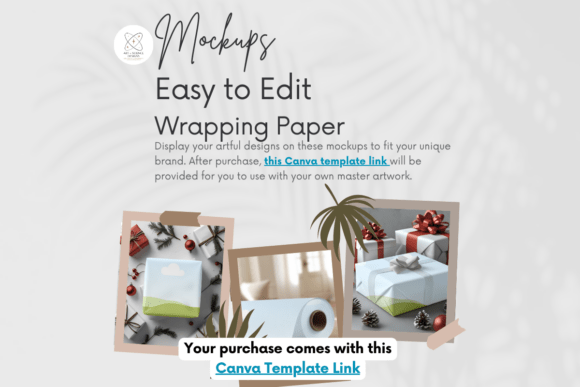
The first impression? Clean, tactile, and quietly sophisticated. Unlike overly saturated or cartoonish Christmas Templates, this one leans into texture—subtle paper grain, soft shadows, and balanced negative space—making it feel less like clip art and more like intentional editorial design. It reads as lifestyle-focused yet professional, with just enough warmth to support gift guides, small business spotlights, or creative entrepreneur resources—without alienating readers seeking substance over sparkle.
Where This Graphic Design Asset Earns Its Keep in Real Publishing Workflows
I tested Wrapping Paper Template for Canva across six live publishing touchpoints: blog featured images, Pinterest pins, newsletter headers, downloadable printables, category thumbnails, and social media graphics for an affiliate holiday roundup. In every case, it elevated visual hierarchy instantly—guiding the eye toward headlines and CTAs without competing with text.
For blog featured images, it provided instant seasonal context while keeping focus on the article’s value proposition. As a Pinterest pin background, its texture translated beautifully at thumbnail scale—no pixelation, no flattening of depth. When layered behind bold sans serif headlines in Canva, it created contrast without visual noise. And for a lead magnet—a free “Holiday Branding Kit” PDF—it became the unifying visual thread across cover, divider pages, and email banner, reinforcing brand identity without needing custom illustration.
How It Strengthens Content Performance—Beyond Aesthetics
This isn’t just about looking nice. Wrapping Paper Template for Canva directly supports measurable content marketing outcomes:
- Stronger first impression: Readers decide in under three seconds whether to stay. This template signals care, consistency, and seasonal relevance before a single word is read.
- Better click-through potential: On Pinterest and email previews, its tactile realism stands out amid flat, AI-generated visuals—driving higher CTR on holiday-themed content.
- Improved reader trust: High-fidelity textures and smart spacing whisper “professionally produced,” which matters especially for digital guides and paid content products.
- More consistent branding: Used across website header banners, newsletter footers, and social media graphics, it builds cohesive visual recognition—even when paired with varied typography.
- Stronger category recognition: On content hubs with multiple seasonal sections (e.g., “Christmas Templates,” “New Year Printables”), it acts as a subtle but reliable visual anchor.
Best-Fit Publishing Use Cases
This graphic design asset shines brightest where warmth, intentionality, and seasonal resonance matter most:
- Blog post featured images for gift roundups, DIY tutorials, or small business spotlights
- Pinterest pins promoting digital downloads, printable designs, or Canva templates
- Newsletter headers and content upgrade banners for holiday-themed lead magnets
- Downloadable resources—eBook covers, worksheets, and digital guides—especially those targeting creative entrepreneurs
- Social media graphics for Instagram carousels or Facebook posts announcing limited-time offers
- Editorial accents in long-form guides (e.g., section dividers in a “Small Business Holiday Prep” digital guide)
Where to Use It Thoughtfully
Not every context benefits equally. Avoid using Wrapping Paper Template for Canva in:
- Mobile-first thumbnails under 300px wide—texture detail gets lost, weakening impact
- Text-heavy blog graphics where legibility suffers against busy backgrounds
- Serious professional niches (e.g., finance, legal, B2B SaaS) unless heavily edited for minimalism
- Websites committed to ultra-minimal visual systems—its decorative quality may clash with strict grid-based layouts
Publisher Notes: Testing Before You Publish
Before deploying in live content, run these practical checks:
- Preview it inside your actual blog layout—not just in Canva—to assess spacing, bleed, and headline alignment
- Test readability: overlay headline text in serif, sans serif, script, and display fonts; check contrast ratios (aim for 4.5:1 minimum)
- View on both desktop and mobile—does the wrap effect hold up, or does it flatten into monotony?
- Convert to grayscale: does the composition retain structure and hierarchy without color cues?
- Place beside common body fonts (e.g., Inter, Lora, Poppins)—does it harmonize or visually compete?
- Verify file size: compress PNGs to under 300KB for fast-loading blog graphics and web performance
- Confirm commercial license: this is essential for monetized sites, affiliate marketing pages, and digital product sales
Why It Fits the Modern Creative Marketplace
In today’s crowded content landscape, generic visuals erode trust. Wrapping Paper Template for Canva delivers what creators actually need—not just holiday decoration, but a foundational piece of editorial infrastructure. It supports the full content lifecycle: from discovery (Pinterest pin), to engagement (blog graphic), to conversion (lead magnet cover), to retention (newsletter banner). For bloggers, online educators, and small business branding efforts, it’s not a “nice-to-have”—it’s a quietly strategic design asset that scales with your audience’s expectations.
Elevating your seasonal content doesn’t require custom illustration or complex design tools. With thoughtful use of Wrapping Paper Template for Canva, you get professional polish, editorial clarity, and authentic seasonal resonance—all within minutes, inside a tool your team already knows.