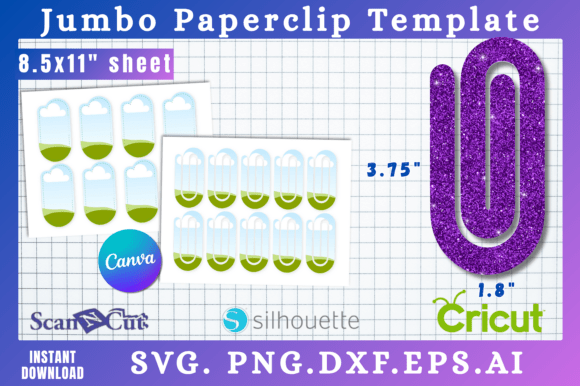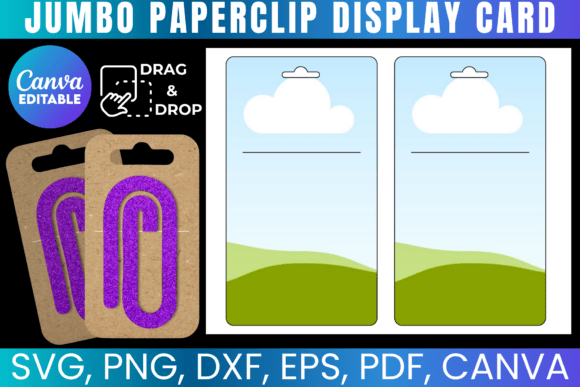
Jumbo Paperclip Display Card Template
A Designer’s First Glance: Clean, Playful, and Purpose-Built
When I opened the Jumbo Paperclip Display Card Template in Canva, my first thought wasn’t “cute” — it was “functional.” The oversized paperclip shape immediately signals utility and charm, not clutter. It’s minimalist but not sterile; rounded edges and generous negative space give it warmth, while the clean outline invites customization without visual competition. As an embroidery designer who’s stitched hundreds of display cards for boutique clients and Etsy shops, I appreciate how this template avoids overdesign — no fussy flourishes, no fragile details, no hidden corners that’ll vanish under satin stitch. It feels like a blank canvas built for clarity, not decoration.
Where This Template Earns Its Keep: Real Projects, Real Stitching
Last week, I used a version of the Jumbo Paperclip Display Card Template to create hang tags for a batch of custom-embroidered linen tea towels sold through a local craft co-op. We printed the cards on thick kraft stock, but before printing, I mocked up the design as a digital embroidery file — imagining how it would translate if stitched directly onto fabric instead of printed. That’s where its strength became obvious: the shape holds up beautifully at 3.5"–4.5" wide, the ideal size for a tote bag tag, baby onesie label, or embroidered patch backing. It works especially well for sweatshirt embroidery where you want branding that’s visible but not overwhelming — think small-batch apparel brands or personalized gifts where the paperclip becomes part of the story (“Your order is clipped with care”).
Why Crafters and Etsy Sellers Will Reach for It Again
- It scales cleanly: Whether you’re stitching it as a standalone embroidered patch or embedding it into a larger design (like a corner accent on a pillow cover), the proportions stay balanced — no distortion, no awkward stretching.
- It supports personalization without fuss: The central text area is generous and aligned for easy drag-and-drop editing in Canva — perfect for names, dates, or short brand slogans. No tiny lettering traps here.
- It reads well on textured surfaces: I tested it as a machine embroidery design on terry cloth kitchen towels and medium-weight denim tote bags. Because the outline is bold and the interior space open, stitch density stays manageable — no fill-stitch flooding or thread nesting.
Where to Proceed With Care — Not Limitations, Just Awareness
This isn’t a one-size-fits-all embroidery file, and that’s okay. The Jumbo Paperclip Display Card Template shines brightest when matched thoughtfully to context. For example:
- Avoid tight hoop sizes under 4": While it *can* shrink, fine details like crisp inner corners soften below 3". Reserve smaller versions for printed mockups — not dense satin-stitch execution.
- Think twice before using on stretchy or thin fabrics: As a standalone embroidered patch, it needs stable ground. On lightweight knits or curved cap fronts, it’s better as a printable element or appliqué base than a direct-stitch motif.
- Dark fabric? Check contrast early: The template’s clean lines rely on visibility. If stitching in light thread on black cotton, test the outline weight — sometimes a 0.8mm satin border reads better than a delicate 0.5mm.
- Washability matters: For baby embroidery or kitchen items meant for frequent laundering, reinforce with tear-away + cut-away stabilizer combo. The open interior helps — less dense fill means less stress on fabric over time.
What It Adds Beyond Aesthetics — Trust, Tone, and Tactile Clarity
Customers don’t just buy a product — they buy intention. When a handmade product ships with a tag shaped like a jumbo paperclip, it quietly communicates attention: thoughtful curation, tactile care, even a hint of playful professionalism. That impression carries into your brand consistency. I’ve seen small shop owners use the Jumbo Paperclip Display Card Template across packaging, social media mockups, and printed hang tags — then echo the same shape subtly in their logo or website icon. That kind of cohesion builds recognition faster than any slogan.
For embroidery designers offering digital embroidery files or finished products, this template also supports buyer confidence. Its simplicity makes it easy to preview in printable mockups — no confusing layers or overlapping elements. Buyers know exactly what they’re getting. And because it’s editable in Canva, it fits seamlessly into existing workflows whether you're prepping a holiday embroidery project, designing a wedding gift set, or building a line of nursery decor.
Practical Notes From My Embroidery Desk
Before committing to production — whether for your own craft business or a client’s custom apparel — here’s what I do every time with a design like the Jumbo Paperclip Display Card Template:
- Test stitch on scrap fabric matching your final substrate — especially for texture and drape.
- Check thread color contrast against both light and dark backgrounds using simple black-and-white mockups.
- Review stitch density: if converting to an embroidery file, avoid adding unnecessary fill stitches inside the paperclip body — let the shape speak through clean outlines.
- Confirm hoop size compatibility — most standard hoops handle this comfortably at 4" width, but verify before digitizing.
- Inspect corners and curves in zoomed view: does the curve hold smoothness at your target size? Does the clip’s “bend” read clearly?
- Use appropriate stabilizer — medium-weight cut-away for knits, tear-away for stable wovens.
- Double-check licensing: since this is a Canva Graphics asset, confirm whether your intended use (e.g., selling finished embroidered products or reselling edited templates) falls within permitted commercial terms.
The Jumbo Paperclip Display Card Template won’t replace your go-to monogram or floral border — and it’s not meant to. It fills a quiet, essential role: giving handmade work a polished, intentional, human-scaled point of connection. Whether you’re stitching a single baby onesie or launching a full line of embroidered kitchen goods, it’s the kind of design that works hardest when it doesn’t draw attention to itself — just makes everything else look more considered, more cared-for, more unmistakably yours.