Grant Proposal Template Word Canva: Marketing Templates & Graphics
As a graphic designer who’s built brand identities for handmade studios, local nonprofits, and Etsy-based product lines over the past 12 years, I approach every design asset with one question first: Does this serve the client’s voice—or just fill space? Recently, I reviewed the Grant Proposal Template Word Canva while prepping visuals for a small-batch ceramic studio applying for a regional arts grant. Their mission is warm, grounded, and quietly confident—no corporate gloss, no sterile minimalism. That context made the template’s tone immediately relevant.
A First Impression That Feels Intentional, Not Generic
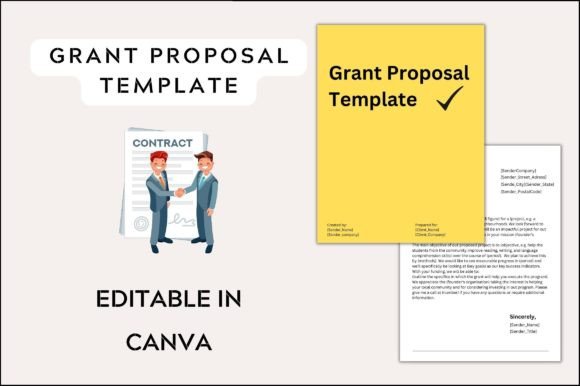
The Grant Proposal Template Word Canva opens with soft neutral tones, clean but not cold typography, and subtle visual rhythm—not flashy, but thoughtfully paced. It leans into modern design without chasing trends: generous white space, balanced margins, and a hierarchy that guides the eye without shouting. It doesn’t scream “corporate” or “academic”—instead, it feels like a quiet invitation to be taken seriously. For clients running a handmade business or launching a community-focused campaign, that balance of professionalism and approachability is gold.
Where This Graphic Design Asset Earns Its Place in Real Projects
In my studio workflow, the Grant Proposal Template Word Canva isn’t just for proposals—it’s become a reliable anchor for several commercial design tasks:
- Packaging design: Used as a base layer for product labels and gift box inserts—its editable Word + Canva structure lets me swap fonts and adjust spacing to match hand-lettered brand marks.
- Social media graphics: Extracted sections (like header bars or section dividers) work beautifully in Instagram carousels and Pinterest pins—especially when paired with earthy photography or muted product mockups.
- Printable design: As a digital download, it prints cleanly at 300 DPI on textured paper—ideal for boutique event kits, donor thank-you packets, or seasonal campaign handouts.
- Canva template customization: The layered Canva file allows quick rebranding—swapping color palettes, inserting SVG icons, or aligning with existing brand guidelines without rebuilding from scratch.
- Cricut project prep: When converting elements for vinyl-cut invitations or wall decals, its vector-friendly structure (when exported properly) holds crisp edges even at 4" scale.
Best Fit: Contexts That Let It Breathe
This graphic design asset shines where clarity meets warmth: hero sections on grant landing pages, printed proposal binders for local foundations, branded workshop handouts, or editorial-style blog posts explaining funding opportunities to creative entrepreneurs. It also supports themed collections—think “Small Business Grant Toolkit” bundles sold on Etsy or creative marketplaces—where consistency across PDFs, checklists, and email templates matters.
Use With Care: Situations That Challenge Its Strengths
It’s not a universal fix. In logo design or brand identity systems demanding extreme scalability, avoid using decorative elements from the template as primary marks—they lack the precision of custom vector illustration. On crowded layouts (e.g., multi-panel trade show banners), its gentle contrast can get lost. And for professional corporate materials—think law firm RFP responses or VC pitch decks—its relaxed cadence may undercut authority unless carefully adapted.
How It Shapes Perception—Beyond Aesthetics
What makes the Grant Proposal Template Word Canva more than just layout scaffolding is how it influences visual trust. Clean alignment, predictable spacing, and accessible font sizing support readability—critical when reviewers skim dense applications. Its emotional appeal lies in restraint: no distracting patterns, no forced whimsy. That builds recognition for repeat users (e.g., a nonprofit submitting quarterly reports) and reinforces a sense of reliability. For a small business branding project, that quiet consistency helps position the client as both capable and human-centered.
Designer Notes You Can’t Skip Before Client Use
Before dropping this into a live project, I always run these checks:
- Test the full document in black and white—does hierarchy hold? Are light gray accents still legible when printed on uncoated stock?
- Preview key sections on both light and dark backgrounds—some Canva elements default to white fills that vanish on dark modes.
- Zoom to 25% and 200%: Does text remain readable at thumbnail size? Do decorative lines blur or pixelate when scaled up for posters?
- Drop it onto real product mockups—tote bags, proposal binders, tablet screens—to assess visual weight and proportion.
- Verify print quality: Export as PDF/X-4, check bleed and trim marks if needed, and confirm CMYK readiness for professional printing.
- Inspect file formats: If PNG assets are included, test transparency against varied backgrounds. If SVG is offered, open in Illustrator to confirm paths are clean and editable.
- Font compatibility: Try pairing template headings with serif (e.g., Playfair Display), sans serif (e.g., Inter), and script fonts (e.g., Pacifico)—some preloaded Canva fonts don’t embed reliably in Word exports.
- Confirm commercial licensing: This digital product includes a commercial license, but always recheck terms for sublimation design, POD use, or resale in bundled design assets.
Final Verdict: A Thoughtful Tool, Not a Shortcut
The Grant Proposal Template Word Canva won’t replace custom brand development—but for time-bound, budget-conscious client work where authenticity and polish must coexist, it delivers uncommon value. It’s especially strong for designers supporting creative entrepreneurs, educators, makers, and grassroots organizations who need to communicate impact without sacrificing visual integrity. As a marketing template, it bridges function and feeling. As a graphics resource, it respects the craft behind good communication. Used intentionally—and verified thoroughly—it becomes less of a template and more of a thoughtful collaborator.