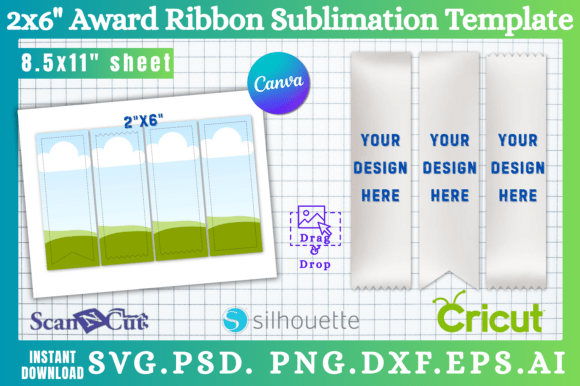
2x6 Award Ribbon Sublimation Templates
A Designer’s First Glance: Clean, Flexible, and Quietly Confident
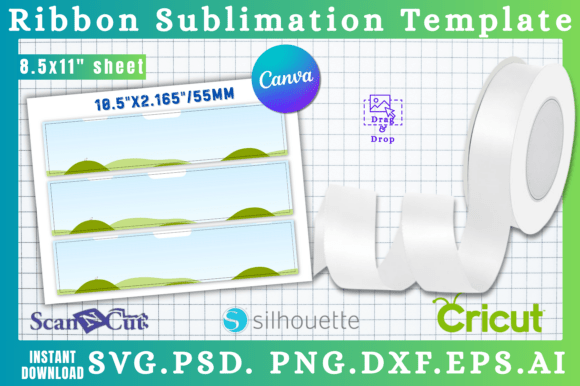
When I opened the 2x6 Award Ribbon Sublimation Templates, what struck me wasn’t flash—it was function. These aren’t flashy, over-rendered graphics. They’re crisp, minimal ribbons sized to fit a standard 8.5 x 11 sheet—ideal for printing mockups or prepping sublimation transfers—but their clean lines and balanced proportions make them unexpectedly versatile for embroidery planning too. As a designer who sketches first, stitches second, I immediately saw how easily these could translate into an embroidered ribbon motif: think satin-stitched edges, subtle fill-stitch centers, and just enough negative space to let fabric breathe.
Real Project Test: A Custom Embroidered Tote for a Local Bakery
Last week, I used one of these templates as the foundation for a limited-run tote bag series for a neighborhood bakery. Their branding needed warmth and recognition—not corporate stiffness—so I adapted the ribbon shape into a soft, curved appliqué design with a hand-lettered “Fresh Daily” banner inside. The 2x6 ratio gave me room to scale cleanly across three tote sizes (small market bag, medium shopper, large gift tote) without distortion. On the final stitched version, the ribbon held its shape beautifully—even on lightweight canvas—because the original template’s proportions avoided fussy corners or cramped lettering that would’ve collapsed in dense fill stitch.
Where It Shines—and Where to Pause
The 2x6 Award Ribbon Sublimation Templates excel in projects where clarity and legibility matter more than complexity: embroidered patches for kids’ camps, sweatshirt chest accents for school teams, baby onesie ribbons (“Best Big Brother”), or kitchen towel borders for boutique home goods. Its open layout invites customization—swap fonts, add icons, adjust spacing—without fighting the underlying structure.
But here’s what I watched closely: on stretchy fabrics like cotton jersey or thin knit caps, the ribbon’s long horizontal shape can distort if hooping isn’t precise. And on dark fabric? That subtle gradient or fine line detail common in sublimation-ready templates often disappears unless you reinforce it with high-contrast thread or add a backing layer in your embroidery file. I also skipped using it directly on textured terrycloth tea towels—the ribbon’s clean edges got lost in the pile. For those, I simplified further: bold outline + running stitch border only.
Stitching Realities You Can’t Skip
- Test on scrap fabric first—especially if stitching on curved surfaces like caps or tapered pillow covers. Ribbons pull differently when wrapped.
- Review stitch density before sending to machine. Some versions of this template include light interior shading that may translate poorly as fill stitch; simplify or convert to satin stitch for cleaner results.
- Confirm hoop size compatibility. A 2x6 ribbon fits neatly in a 5x7 hoop—but only if your design doesn’t extend beyond those bounds. Always check actual dimensions in your embroidery software.
- Inspect small details at 200% zoom. Tiny serifs or delicate curves may vanish at stitch scale. If you plan to use it for baby embroidery or personalized gifts, prioritize readability over decoration.
- Try black-and-white mockups before committing thread colors. What reads well on screen may blur when stitched—especially with low-contrast combos like navy on black.
How It Shapes Perception—Before and After Stitching
This is where many designers underestimate a simple ribbon template. Used well, the 2x6 Award Ribbon Sublimation Templates elevate perceived value instantly. A custom embroidered apron with a clean, branded ribbon feels intentional—not DIY. A holiday gift tag stitched from this layout reads as thoughtful, not templated. Customers notice the balance: symmetry without rigidity, polish without coldness.
But it only works if execution matches intent. I’ve seen sellers use these as-is on Etsy listings—then ship items where the ribbon looks pixelated or misaligned because they didn’t adjust for fabric shift or stabilizer choice. That erodes trust faster than any missing feature. Handmade presentation hinges on consistency: same thread sheen, same stitch tension, same attention to corner sharpness. This template gives you the frame—you bring the finish.
Practical Notes for Craft Business Owners & Etsy Sellers
If you’re selling finished embroidered products—or digital embroidery files based on this template—here’s what matters:
- Stabilizer choice is non-negotiable. Medium-weight cutaway works best for most applications; tear-away suffices for stable woven fabrics like tote canvas or tea towels.
- Thread colors must pop against background fabric. Avoid pastel-on-pastel combos unless you’re aiming for subtlety (e.g., nursery decor). For commercial embroidery, contrast builds recognition.
- Verify licensing terms before reselling digital adaptations. Since this is listed as a Graphics product in Canva, confirm whether redistribution or derivative embroidery files are permitted—not assumed.
- Pair with printable mockups when listing on Etsy or your small shop site. A realistic photo of the ribbon stitched on a real tote bag beats five stock screenshots every time.
- Think beyond apparel. These ribbons work surprisingly well as embroidered labels on handmade blankets, quilt tags, or even folded linen napkin hems—just scale down and simplify stitch count.
Final Thought: A Tool That Rewards Intention
The 2x6 Award Ribbon Sublimation Templates won’t wow on its own. It’s not a showstopper design—it’s a quietly capable foundation. It rewards designers who understand proportion, respect fabric behavior, and know when to edit rather than embellish. Whether you’re prepping a batch of embroidered patches for a craft fair, building consistent branding for your handmade product line, or designing a digital embroidery file for other makers, this template earns its place in your workflow—not because it does everything, but because it does one thing very well: gives you space to be clear, confident, and human.